Valmiki Ramayana Balkanda - The Adi Kavya Simplified.


A Reflection on Divine Trust and Dharmic Vision
In the unfolding of the Śrīmad Vālmīki Rāmāyaṇa, the bond between Lord Rama and Sugriva is not merely a strategic alliance, but a profound example of trust, leadership, and dharmic alignment. Despite Sugriva’s initial failures and hesitation, Lord Rama placed deep trust in him — not because of political need, but because He recognized the divine potential hidden beneath past fears.
This moment, narrated in Kishkindha Kanda, teaches us that true trust is not based on outer qualifications alone, but on one’s intent, sincerity, and capacity for transformation.
The Meeting of Rama and Sugriva: A Karmic Alignment
After the painful abduction of Sita, Rama and Lakshmana reached the Rishyamukha mountain, where Sugriva, the exiled Vanara prince, was hiding in fear of his brother Vali.
Their meeting was not a coincidence. Both had faced betrayal — Rama by Kaikeyi’s boon, Sugriva by Vali’s mistrust. Both were exiled from their rightful places, wandering in forests amidst uncertainty.
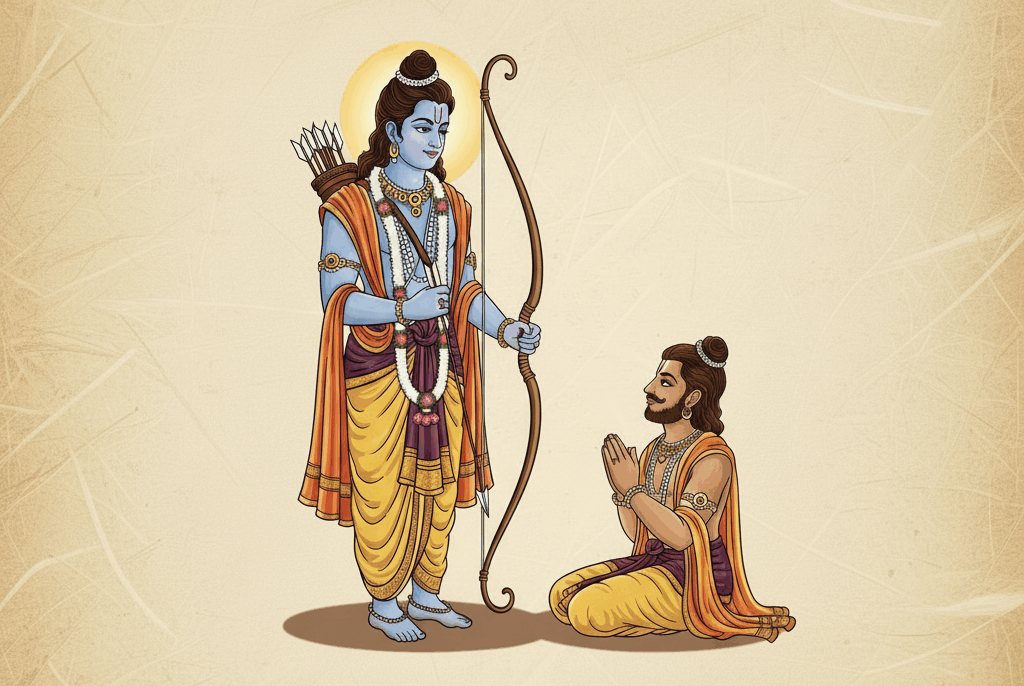
Seeing Rama’s sorrow, Sugriva sent Hanuman to understand who these divine-looking brothers were. The moment Rama met Hanuman and then Sugriva, the bond of destiny was sealed. Rama promised to help Sugriva reclaim his kingdom, while Sugriva vowed to help find Sita.
“सखा धर्मे स्थितः शूरो यशस्वी चापि वीर्यवान्।
तव सौहृद्यमाश्रित्य करिष्ये प्रतिज्ञां त्वहम्॥”
(Valmiki Ramayana, Kishkindha Kanda, Sarga 5, Shloka 21)
“You, O brave and righteous one, have extended friendship. In return, I shall fulfill my vow.”
Why Did Rama Trust Sugriva?
Despite Sugriva’s past fear and hesitation, Rama placed deep trust in him. He guided Sugriva like a mentor, lifted him with compassion, and held him accountable without rejection. This wasn’t blind trust — it was the leadership of upliftment, where the Lord sees not only what is, but what can be.
When Sugriva hesitated to send his army even after becoming king, Rama reminded him of his dharma — not with anger, but with truth and firmness.
Deeper Significance:
- Rama recognized potential, not just performance.
- Divine trust uplifts, it does not reject.
- Leadership means guiding others to their dharma.
- True dharma sees beyond appearances — into the soul’s intention.
“सत्यं शीलं परं ब्रह्म धर्मश्च महतो बलम्।”
(Valmiki Ramayana, Kishkindha Kanda, Sarga 33)
“Truth and character are supreme; Dharma is the greatest strength.”
Rama as a Leader: Not a Judge, But a Guide
Unlike a worldly king, Rama never used fear or punishment to extract obedience.
He waited, reminded, and gave space for Sugriva to rise. And Sugriva, when reminded, did awaken to his duty. He mobilized the Vanaras, sent search parties in every direction, and fulfilled his vow.
Rama’s leadership was grounded in seva (service) and compassion. He uplifted Sugriva, empowered Hanuman, and united all for a divine mission — the rescue of Sita and the defeat of adharma.
Was Sugriva Perfect? No. Was He Capable? Yes.
Sugriva delayed sending troops initially out of comfort and forgetfulness. But Rama didn’t label him unworthy — He guided him back to responsibility.
This shows that trust in spiritual leadership is not about perfection, but willingness to be corrected and rise again.
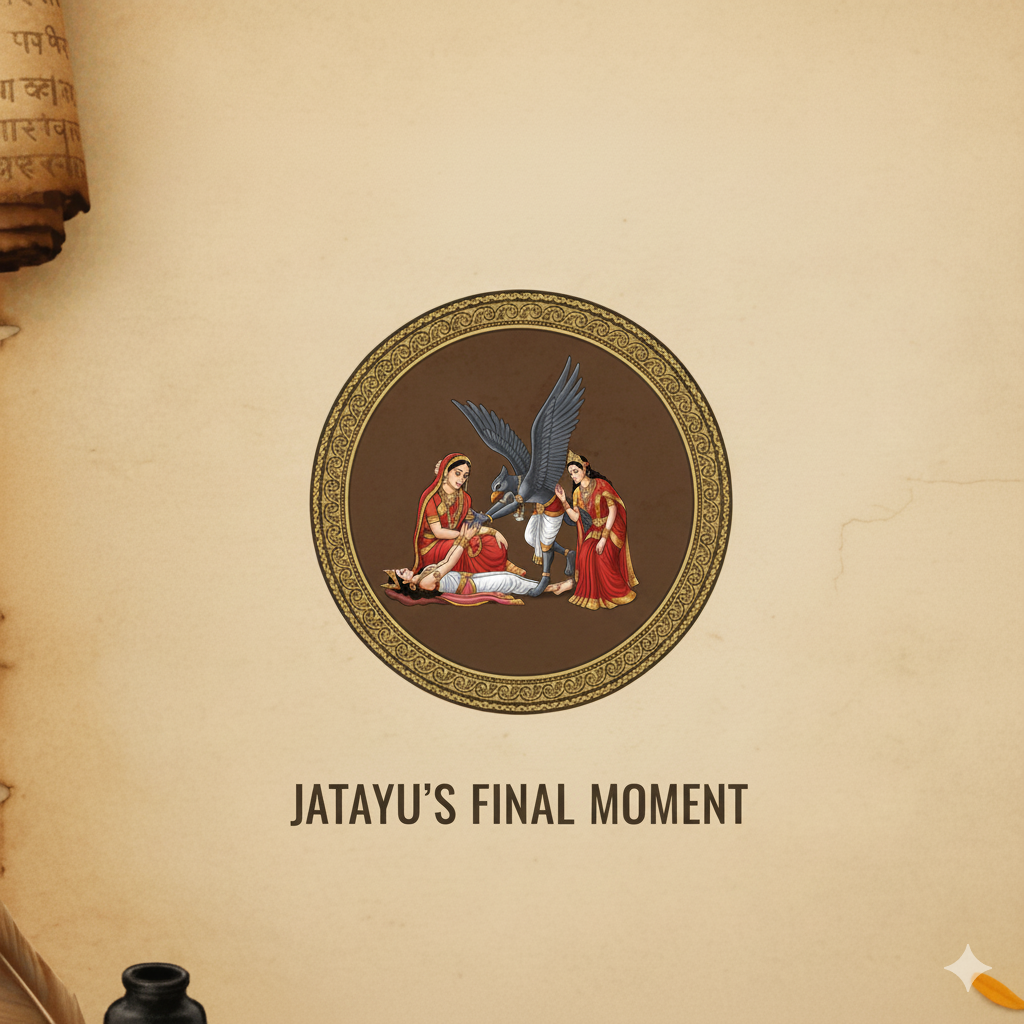
Just as Jatayu was honored despite defeat, Sugriva was uplifted despite hesitation — because both acted eventually in service of Dharma.
“धर्मो रक्षति रक्षितः।”
(Manusmriti 8.15, often quoted in Ramayana commentaries)
“Dharma protects those who protect it.”
Conclusion: Trust Rooted in Dharma
Lord Rama’s trust in Sugriva is a timeless reminder that true trust is not transactional — it is transformational.
When we look beyond the surface, when we choose to guide rather than judge, and when we align ourselves with Dharma — we embody the same spirit as Rama.
This story is not about politics or war — it is about how divine leadership trusts, uplifts, and transforms.
Soulful Reflections: FAQs
Q1. Why did Rama trust Sugriva despite his past mistakes?
Because He saw Sugriva’s sincerity and potential to rise. Rama didn’t judge Sugriva’s fear — He guided him to overcome it.
Q2. Did Sugriva live up to Rama’s trust?
Yes. Though delayed initially, Sugriva fulfilled his word, mobilized a massive search effort, and supported Rama till victory.
Q3. What does this teach about spiritual leadership?
True leadership is patient, uplifting, and dharma-centered — it transforms lives, not just commands obedience.
Q4. What if people fail even after we trust them?
Then we follow Rama — correct with compassion, remind them of their duty, and still offer space for transformation.
Q5. Why is Sugriva’s alliance important in Ramayana?
Because it shows that divine purpose unfolds even through imperfect instruments, and that God empowers the sincere, not the flawless.
Discover More Timeless Lessons
To explore more such divine histories and insights, we invite you to experience the Ramayana Book, a verse-by-verse exposition rooted in authentic Sanskrit scriptures and timeless commentaries.
This sacred work offers deep reflections on Dharma, Bhakti, and inner transformation for today’s seekers
👉 Access the Ramayana Book here.