Valmiki Ramayana Balkanda - The Adi Kavya Simplified.


The Śrīmad Vālmīki Rāmāyaṇa, composed by Maharishi Vālmīki, is a divine scripture that presents the life and teachings of Lord Rāma, the Supreme Personality of Godhead.
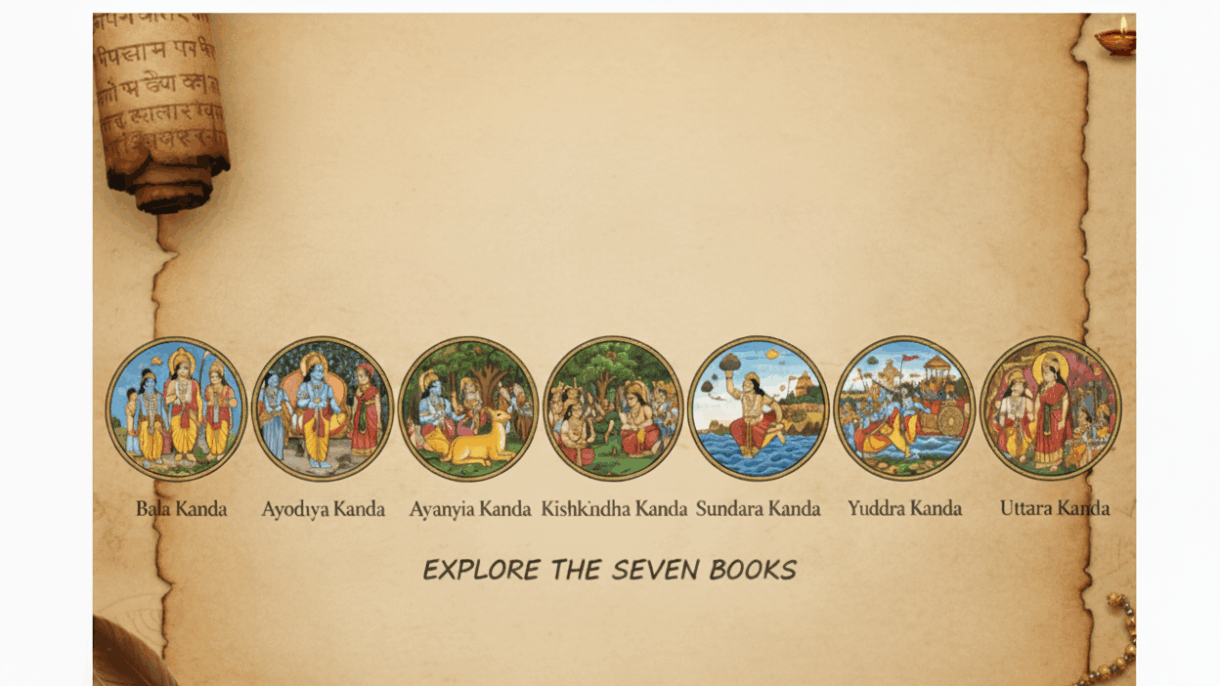
Divided into seven Kandas (sections), the Ramayana mirrors the journey of life itself — from innocence to sacrifice, from battles to ultimate spiritual triumph.
Each Kanda carefully guides the reader through the ideals of Dharma (righteousness), Bhakti (devotion), and Karma (duty).
The Seven Kandas of the Ramayana — Explained in Detail
1. Bāla Kāṇḍa (The Childhood Phase)
The Bala Kanda describes the divine birth of Rama and His brothers, the prosperity of Ayodhya, and the early expressions of Rama’s noble character. King Dasharatha, longing for sons, performs the Putrakameshti sacrifice and is blessed with four divine sons, each embodying a part of Lord Vishnu. Rama’s boyhood pastimes display supreme humility, obedience, and valor, far beyond ordinary children. Under the guidance of Sage Vishwamitra, Rama subdues demons like Tataka and protects sacred yajnas, revealing His divine mission. The breaking of Lord Shiva’s bow at Sita’s swayamvara culminates in Rama’s marriage to Devi Sita, symbolizing the union of virtue and devotion.
Deeper Significance:
- Establishment of Dharma from the earliest stage of life.
- Emphasis on humility, obedience, and learning before heroism.
- Celebration of divine love and sacred marriage.
“रामो विग्रहवान् धर्मः” (Rāmō vigrahavān dharmaḥ)
(Valmiki Ramayana, Bala Kanda, Sarga 1, Shloka 10)
2. Ayodhyā Kāṇḍa (Life in Ayodhya and Exile)
The Ayodhya Kanda portrays Rama at the height of His worldly blessings, only to willingly renounce everything to uphold His father’s honor. As the preparations for His coronation are underway, Queen Kaikeyi, influenced by Manthara, demands Rama’s exile and Bharata’s coronation. Without hesitation, Rama accepts exile for fourteen years, offering no resistance and displaying supreme surrender to Dharma. Sita and Lakshmana, bound by love and duty, accompany Him into the wilderness. King Dasharatha, overwhelmed by sorrow, departs from the world. Bharata, although crowned, refuses to ascend the throne and installs Rama’s sandals, ruling in His name.
Deeper Significance:
- Sacrifice of personal happiness for the sake of Dharma.
- Supreme detachment and unwavering commitment to truth.
- Loyalty and faithfulness within familial relationships.
“पितुर्वाक्यप्रतिश्रान्तः कैकेय्यातो न कुप्यति” (Pitur vākyapratishrāntaḥ kaikeyi-yāto na kupyati)
(Ayodhya Kanda, Sarga 19, Shloka 31)
3. Araṇya Kāṇḍa (The Forest Challenges and Sita’s Abduction)
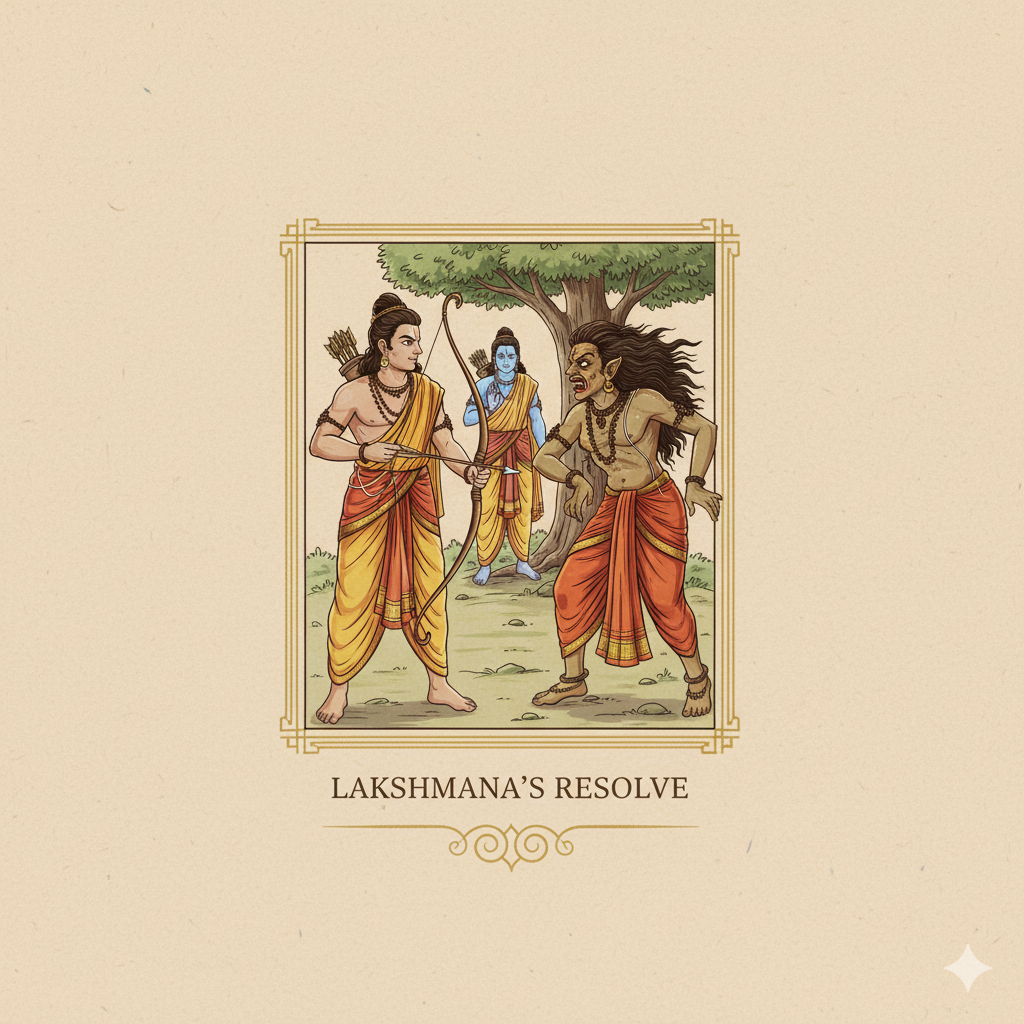
Aranya Kanda depicts Rama’s life in the Dandakaranya forest, where He faces many trials while living as an ascetic. Despite His royal upbringing, Rama humbly accepts the hardships of forest life. The trio’s encounters with sages and demons reveal the constant clash between Dharma and Adharma. The demoness Shurpanakha’s humiliation at the hands of Lakshmana leads to a chain of events culminating in the abduction of Sita by Ravana. Rama’s anguished search for Sita represents the universal soul’s longing for the lost spiritual connection with the Supreme.
Deeper Significance:
- Spiritual life is filled with trials that refine character.
- Temptations and evils challenge even the pure-hearted.
- Separation enhances the glory and sweetness of love and devotion.
“न जातु पुत्रः पितरौ समुत्क्रमेत्त्” (Na jātu putraḥ pitarau samutkramet)
(Aranya Kanda, Sarga 39, Shloka 20)
4. Kiṣkindhā Kāṇḍa (Alliance with the Vanaras and Search for Sita)
In the Kishkindha Kanda, Rama meets Hanuman, the embodiment of perfect devotion. He forms an alliance with Sugriva, helping him reclaim his kingdom from Vali. Rama’s friendship with Sugriva emphasizes the importance of righteous alliances in achieving noble goals. Once established as king, Sugriva sends his monkey armies across the world to search for Sita. Hanuman’s mission begins, destined to play the most crucial role.
Deeper Significance:
- Even the Supreme Lord values the help of dedicated allies.
- True leadership requires humility, strategy, and compassion.
- Pure devotees, like Hanuman, emerge during crises to serve selflessly.
“हरिः सहायः कृत्येषु जयति” (Hariḥ sahāyaḥ kṛtyeṣu jayati)
(Spirit conveyed in Kishkindha Kanda, Sarga 40 onwards)
5. Sundara Kāṇḍa (Hanuman’s Heroic Exploits in Lanka)
Sundara Kanda narrates the extraordinary exploits of Hanuman as he crosses the ocean to reach Lanka. His strength, intelligence, and unwavering devotion shine brilliantly. Hanuman discovers Sita imprisoned in Ashok Vatika, consoles her with Rama’s message, and assures her rescue. When captured, Hanuman boldly warns Ravana and burns down a part of Lanka, demonstrating the power of devotion fueled by righteousness.
Deeper Significance:
- With faith and devotion, even impossible tasks become easy.
- Hanuman embodies the ideal qualities of a servant of God.
- True devotion gives courage, humility, and fearlessness.
“भक्तिः सनातनी रामे” (Bhaktiḥ sanātanī rāme)
(Sundara Kanda, essence between Sarga 36–38)
6. Yuddha Kāṇḍa (The Great War and Victory over Evil)
The Yuddha Kanda brings the Ramayana to its grand climax. Rama builds the bridge to Lanka (Rama Setu) with the help of the Vanaras. A series of fierce battles ensue where many powerful Rakshasas, including Indrajit and Kumbhakarna, are slain. Finally, Rama kills Ravana in a magnificent battle, freeing Sita. Sita undergoes a fire ordeal to prove her purity, and Rama prepares to return to Ayodhya victorious.
Deeper Significance:
- Goodness triumphs over evil but demands perseverance and courage.
- Divine help manifests when Dharma is upheld steadfastly.
- Victory is meaningful only when based on virtue and sacrifice.
“धर्मो रक्षति रक्षितः” (Dharmo rakṣati rakṣitaḥ)
(Manusmriti 8.15, applied by commentators to Yuddha Kanda’s victory)
7. Uttara Kāṇḍa (The Reign of Rama and Final Departure)
Uttara Kanda describes Rama’s return to Ayodhya and the establishment of Rama Rajya — an ideal society based on Dharma, compassion, and justice. However, societal doubts force Rama to send Sita to the forest, where she gives birth to Lava and Kusha. Ultimately, Sita returns to Mother Earth, and Rama completes His earthly mission, returning to His eternal abode. The Ramayana thus ends not with mere celebration but a call to higher detachment.
Deeper Significance:
- Even divine personalities must face worldly criticism and responsibilities.
- Ultimate leadership requires personal sacrifice for societal harmony.
- The journey of Dharma culminates in pure renunciation and reunion with the Divine.
“रामो राज्यं उपस्थितः” (Rāmo rājyam upasthitaḥ)
(Uttara Kanda, Sarga 128, Shloka 105)
Final Reflections:
The seven Kandas of the Ramayana offer a comprehensive guide to human life — how to live righteously, face challenges, serve selflessly, and return home to Godhead.
Discover the Essence of Ramayana
To deepen your journey through the timeless wisdom of the Ramayana, Valmiki Ramayana Balkand offers a verse-by-verse exploration based on authentic Sanskrit scriptures, traditional commentaries, and devotional insights.
This book not only narrates the divine pastimes of Lord Rama’s early life but also unveils their deeper spiritual meanings and practical lessons for modern living.
Designed for sincere seekers, it provides a meditative reading experience rooted in Dharma, Bhakti, and inner transformation.
👉 Explore the Ramayana Book here.