Valmiki Ramayana Balkanda - The Adi Kavya Simplified.


A Reflection on Devotion, Dharma, and True Leadership
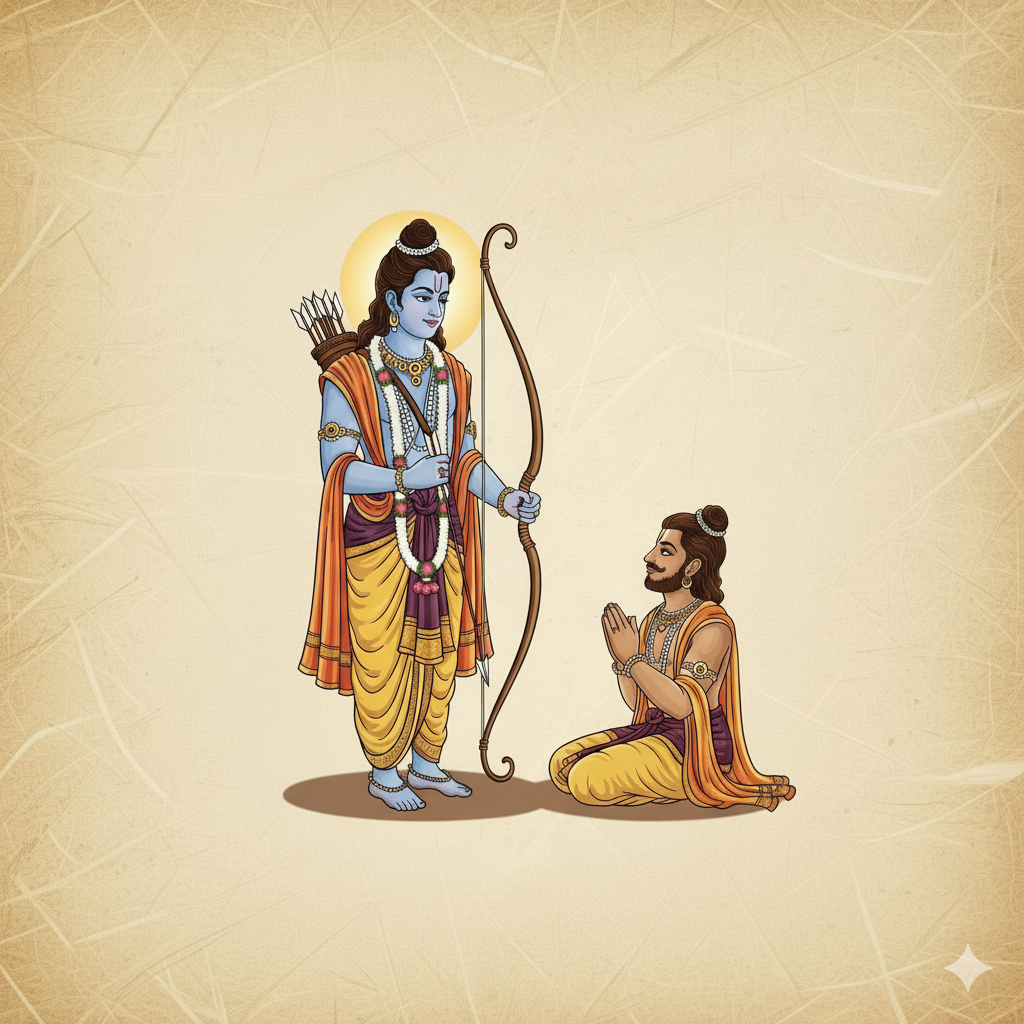
In an age where power is often seen as the highest pursuit, Bharata—one of the noblest characters in Valmiki Ramayana—chose a path few would dare walk. Despite the legal and societal opportunity to become king, Bharata refused the throne of Ayodhya, not out of fear or hesitation, but from a place of deep spiritual clarity, selfless devotion, and unwavering dharma.
Let’s explore the divine dimensions behind Bharata’s decision:
Unwavering Devotion to Lord Rama: Love Beyond the Throne
For Bharata, Rama was not merely an elder brother—He was Maryada Purushottam, the embodiment of Dharma. Ruling Ayodhya in Rama’s absence felt spiritually unacceptable. Bharata believed that the kingdom belonged to Rama alone.
Shloka (Ayodhya Kanda, 85.20)
“न मे राज्यं न मे लक्ष्मीर्न मे प्राणाः प्रियः सखा। भ्रातृव्यसंज्ञां राज्यान्मे रामं पुनरदृश्यताम्॥”
“Neither kingdom, nor fortune, nor even my life is dear to me; let me only behold Rama again, who is the true king.”
🔹 Deeper Significance:
- Bharata’s refusal reminds us that true love doesn’t compete, it submits.
- His bhakti reveals the ideal mood of a servant-leader, whose joy lies in the happiness of the beloved.
Loyalty to Dharma and the Sacred Lineage
Bharata had imbibed the core values of the Ikshvaku dynasty—truth, dharma, and righteous rule. Even though Dasharatha’s boons to Kaikeyi legally placed him on the throne, Bharata refused to betray the divine order that made Rama the rightful heir.
Shloka (Ayodhya Kanda, 82.20)
“राज्यं रामस्य धर्मेण न च कामेन मे क्षमम्।”
“The kingdom belongs to Rama by righteousness, not by my desire.”
🔹 Deeper Significance:
- True leadership isn’t about entitlement; it’s about alignment with dharma.
- Bharata chose renunciation over ambition, a sign of his elevated consciousness.
Condemnation of Kaikeyi’s Actions: Truth Over Blood Ties
Bharata was devastated when he learned of Kaikeyi’s manipulative actions. He didn’t stay silent out of respect or fear but confronted her head-on, holding truth above even maternal bonds.
Shloka (Ayodhya Kanda, 74.17)
“न चाह्यहं राज्यं, न सुखानि, न च प्रियान्। रामो राजत्वमर्हति न त्वं मातरि मे प्रियम्॥”
“I do not desire kingdom or pleasures. Rama alone deserves to rule, not me. You are not dear to me, O Mother!”
🔹 Deeper Significance:
- Bharata’s stand teaches us that true dharma often requires painful choices.
- It shows the courage to prioritize righteousness even above personal relationships.
Bharata’s Rule as Rama’s Representative: Leadership as Seva
Bharata returned to Ayodhya with Rama’s Paduka (wooden sandals) and placed them on the royal throne, choosing to rule as Rama’s servant, not as king. He lived like a hermit in Nandigram, practicing austerity and eagerly waiting for Rama’s return.
Shloka (Ayodhya Kanda, 112.26)
“रामस्य पादुका राजन् यथा सिंहासनं गता।”
“Rama’s sandals ascended the throne; Bharata only acted as their humble servant.”
🔹 Deeper Significance:
- Bharata’s style of governance reflects servant leadership at its highest form.
- He didn’t govern to enjoy power, but to preserve righteousness until the rightful king returned.
Symbol of Ideal Brotherhood: A Legacy of Love and Loyalty
Bharata’s sacrifice is one of the purest forms of fraternal devotion in all of Indian literature. His love for Rama wasn’t tainted by rivalry or politics; it was sacred, loyal, and unwavering.
Shloka (Ayodhya Kanda, 112.31)
“स्नेहं भ्रातृषु यो धत्ते धर्मं च परिपालयेत्। स राजा स धर्मज्ञः स पण्डितः स पावनः॥”
“One who loves his brothers and upholds dharma is the true king, a knower of truth, a learned soul, and pure.”
🔹 Deeper Significance:
- Bharata exemplifies that family love, when rooted in dharma, is divine.
- His relationship with Rama is a template for all devotee–Lord relationships.
Conclusion: The Crown of Selflessness
Bharata’s refusal wasn’t an emotional impulse—it was a deliberate choice born out of spiritual maturity. In an age where power often corrupts, Bharata teaches us the virtue of waiting, serving, and surrendering. His life answers a profound question:
What is real leadership?
Not commanding, but serving with integrity.
📘 Ramayana Book – Dive Deeper Into the Divine Pastimes
To explore more about Bharata’s character and the timeless wisdom of Valmiki Ramayana, we invite you to read our verse-by-verse edition:
👉 Ramayana Book — A devotional journey rooted in Sanskrit verses, acharya commentaries, and practical reflections for modern spiritual seekers.